Data breaches, 24 billion stolen records exposed online. Here’s what to do – Malwarebytes Analysis





SME Cybersecurity News | SMECYBERInsights.co.uk
SME Cybersecurity News – Helping Keep UK SMEs CYBERSafe with Daily News, Threat Intel & Best-Practice

SECURUS Communications Ltd
Securus is a managed communications Operator, providing next-generation network infrastructure and value added services to Managed Hosting providers and the ‘cloud generation’ of enterprises. Securus priority is to offer communication services that represent excellent value for money and are backed by exceptional levels of support.
Contact Securus
Securus Communications Ltd
Station Road, Landmark house, Hook, England RG27 9HA, GB
T: Enquiries: 03451 283457 | Service Desk: 03451 283458
Securus on LinkedIn | Securus on “X” | https://securuscomms.com
Gibraltar: Thursday, 25 June 2026 – 07:00 CET
Data breaches, 24 billion stolen records exposed online. Here’s what to do – Malwarebytes Report & Analysis
By: Iain Fraser – Cybersecurity Journalist
Published in Collaboration with:
Securus Communications Ltd
SMECyberInsights.co.uk – First for SME Cybersecurity
Google Indexed on:
#SMECyberInsights #SMECybersecurity #SMECyberInsights #SME #CyberSafe #CyberSecurity #Cybersecurity #NCSC #CyberEssentials #CyberResilience
SME Cybersecurity response to the 24 billion stolen records data dump
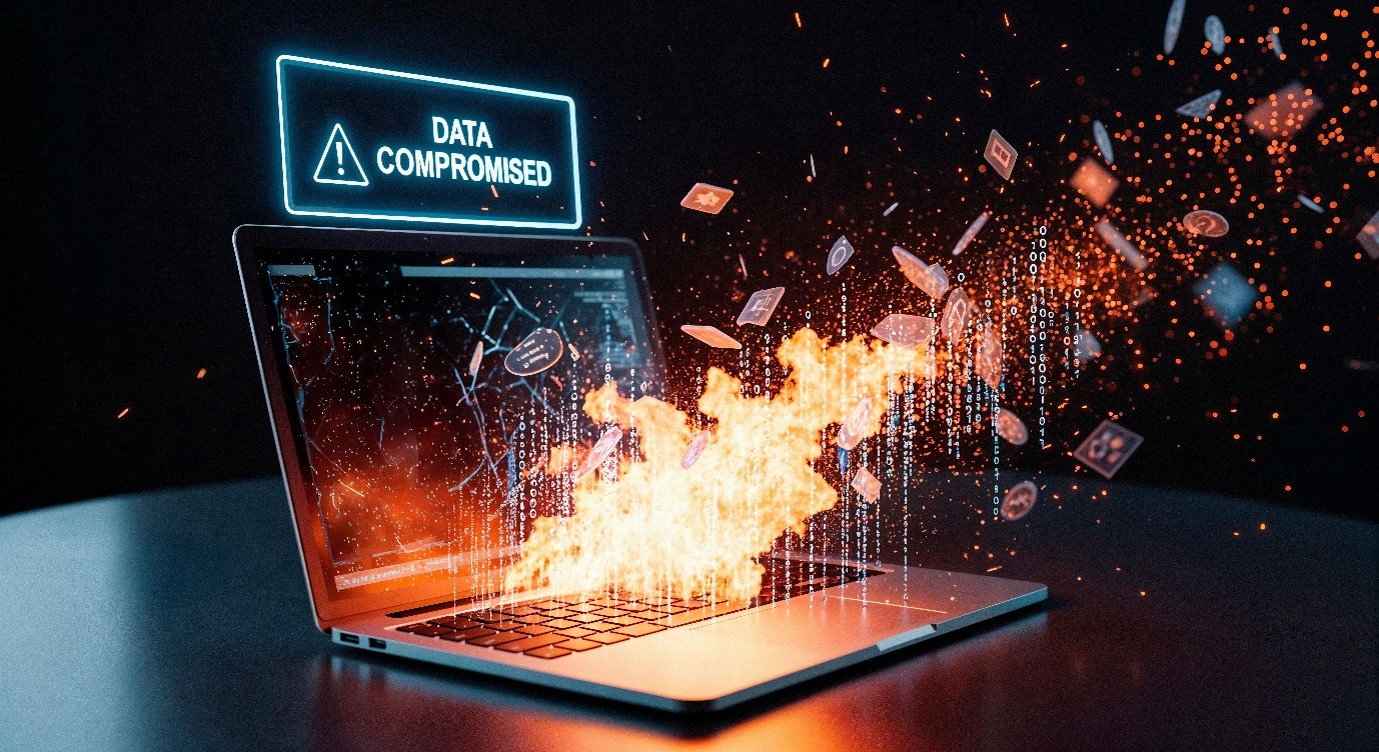
A breach of this scale changes the risk picture for every UK SME, even if your business was not directly hacked. Malwarebytes has highlighted a massive data exposure involving 24 billion stolen records, and the immediate threat is not just old passwords resurfacing, it is what criminals do next with them, account takeover, phishing, business email compromise, and fraud against smaller firms that often lack full-time security teams.
SME Cybersecurity: what the 24 billion stolen records exposure means for UK businesses
A stolen records dump usually contains combinations of email addresses, usernames, passwords, browser data, or session details harvested by infostealer malware. In plain English, infostealers are malicious programs that quietly pull login data from infected devices and pass it to criminals. For SMEs, that matters because one compromised laptop used by a director, finance lead, or outsourced IT administrator can expose access to email, cloud storage, payroll platforms, and supplier portals.
This is not theoretical. The UK Government Cyber Security Breaches Survey 2025 found that 43% of UK businesses identified a Cybersecurity breach or attack in the previous 12 months, with phishing remaining the most common threat. Large credential dumps make that problem worse because attackers can automate login attempts across Microsoft 365, VPNs, accounting tools, and e-commerce systems used by SMEs every day.
Why should SMEs care if the stolen data came from somewhere else?
Because attackers do not respect organisational boundaries. If a staff member reused a password across services, or saved credentials in a browser on an infected home or work device, your business could still be exposed.
In practice, the risks for SMEs include:
* Business email compromise, where attackers access inboxes to redirect payments or impersonate senior staff
* Operational disruption, if Microsoft 365, bookkeeping, or CRM access is locked or abused
* Supply chain cyber risk, if compromised accounts are used to target customers or suppliers
* Compliance exposure, if poor access controls contribute to a personal data breach under the ICO’s security guidance for UK GDPR
That said, this is exactly where practical SME Cybersecurity basics make a measurable difference.
What should a UK SME do now?
Start with the actions that reduce credential abuse fastest.
1. Reset passwords for high-risk accounts first
Prioritise Microsoft 365, email admin, finance systems, password managers, remote access, and shared service accounts.
2. Turn on multi-factor authentication everywhere critical
The NCSC guidance on multi-factor authentication is clear, MFA sharply reduces the value of stolen passwords.
3. Check for password reuse across the business
Focus on directors, finance staff, IT admins, and anyone with supplier payment authority.
4. Review endpoint security on staff devices
Infostealers usually start on endpoints, meaning laptops and desktops. Strong endpoint security for small business, patching, and browser hygiene matter here.
5. Audit privileged access and shared accounts
If multiple people use the same admin login, change that. Individual named accounts improve accountability and speed up cyber incident response.
6. Use a recognised baseline such as Cyber Essentials
Its controls, including secure configuration, access control, patching, and malware protection, are practical for budget-conscious SMEs.
7. Document your response using the NIST Cybersecurity Framework
Even a lightweight approach helps, identify key systems, protect critical accounts, detect unusual sign-ins, respond quickly, and recover access cleanly.
How can SMEs reduce future exposure?
The strongest long-term move is to assume some credentials are already circulating and build around that reality. That means MFA by default, fewer admin rights, better monitoring, and clear joiner-mover-leaver processes for staff accounts.
For most SMEs, strong Cybersecurity is not about perfection. It is about making stolen data far less useful to criminals. A good next step is a simple Cyber Essentials readiness assessment focused on identity, devices, and internet-facing access.
FAQs
1. What does a stolen records dump mean for a small business?
It means employee or business credentials may already be in criminal circulation, even if your own systems were not breached directly. Attackers can use those records for phishing, password spraying, or account takeover. SMEs should treat large data dumps as a trigger to review passwords, MFA, and privileged access immediately.
2. How do UK SMEs know if leaked credentials put them at risk?
Look for password reuse, unusual login alerts, unexplained MFA prompts, mailbox rule changes, and suspicious activity in Microsoft 365, finance tools, or VPN services. SMEs with shared admin accounts or limited log monitoring are at higher risk because compromise is harder to spot and contain quickly.
3. What are the first Cybersecurity actions after news of a major credential leak?
Start with admin and finance accounts, reset passwords, enable MFA, review endpoint protection, and check sign-in logs for unusual access. Then align your controls with NCSC guidance and Cyber Essentials. These steps are realistic for SMEs and directly reduce the risk of business email compromise and follow-on fraud.
Lost your data? Don’t panic. R3 can help! Real data recovery services from a real UK lab!
Data loss can happen at any time and can happen in the most unexpected ways. As long as your device hasn’t been stolen R3 can recover your data from the most unlikely disasters. From their wholly secure state of the art Recovery Lab they can deploy the very best data recovery service as quickly as possible.
Contact R3 Data Recovery
Security House, Windsor St, Sheffield S4 7WB,
T: Enquires 800 999 3282 | Emergency: 07511 051360
R3 On LinkedIn | https://www.r3datarecovery.com/
SMECYBER Insights – Helping Keep Small Business CYBERSafe!
Launched in 2020 by Cybersecurity Journalist Iain Fraser and his team at IfOnly… SMECYBERInsights was developed to be the go-to platform providing definitive, reliable & actionable Cybersecurity News, Intel, Awareness & Training specifically written and curated for Small Business & Enterprise Owners, Partners and Directors throughout the UK. #SMECyberInsights #SMECyberSecurity #CyberAttack #CyberAwareness #Compliance #DDoS #Fraud #Ransomware #ScamAlert #SME #SmallBusiness #SmallBusinessOwner #ThreatIntel