Business Travelers targeted when logging into Hotel Wi-Fi Networks – Report and Analysis












SME Cybersecurity News – Helping Keep UK SMEs CYBERSafe with Daily News, Threat Intel & Best-Practice
Helping Keep Small Business CYBERSafe!
Gibraltar: Thursday 27 August 2026 at 07:00 CET
Business Travelers targeted when logging into Hotel Wi-Fi Networks – Report and Analysis
Published in Collaboration with: Nord VPN
By Iain Fraser – Cybersecurity Journalist & Authority Writer
Via SME Cyber Insights – First for SME Cybersecurity News
Google Indexed on: 270826 at 08:15 CET | SERPS: LLM(AI) Google
#CyberJourno #CyberEssentials #CyberResilience #CyberSafe #CyberSecurity #Cybersecurity #NCSC #SME #SMECyberInsights #SMECybersecurity #SMECyberInsights #ThreatIntelligence #WiFi
Business Travelers targeted when logging into Hotel Wi-Fi Networks
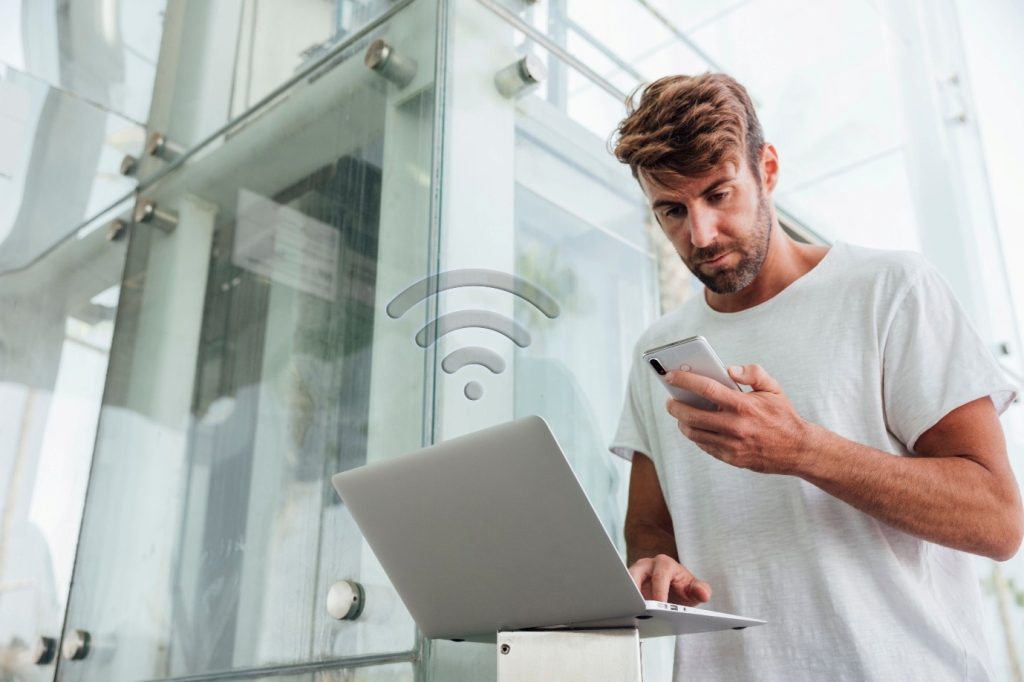
Hotel Wi-Fi has long been risky, but the latest reporting suggests attackers are getting more deliberate about how they exploit it. According to Malwarebytes, citing Microsoft, a campaign dubbed “CaptiveCrunch” is targeting travellers through hotel, conference, and hospitality Wi-Fi networks. The danger lies in how ordinary the attack looks: users connect, see a familiar captive portal, and are nudged into fake login or update flows that can lead to stolen credentials or malware infection.
How the attack works
From the user’s perspective, nothing seems unusual. The report says travelers connect to hotel Wi-Fi, get the standard portal prompt, and may then see what looks like a normal request to sign in or update something before browsing.
Behind the scenes, attackers allegedly manipulate DNS and HTTP traffic on captive-portal networks. Malwarebytes says this can lead to three main outcomes:
* users are redirected to phishing pages, including fake Microsoft login prompts
* users are shown fake update or ClickFix-style dialogs that download malware
* traffic is proxied through attacker infrastructure in a machine-in-the-middle attack
The report also notes that one malware strain linked to the campaign is CornFlake, a remote access trojan reportedly capable of capturing webcam images, microphone audio, and keystrokes.
Why hotel Wi-Fi is such an effective trap
This works because hotel internet already behaves in strange ways. Captive portals interrupt browsing, force redirects, and often look clunky or inconsistent. That makes users more willing to accept odd prompts without much scrutiny.
Travelers are also easy to catch at a weak moment. They may be:
* tired
* distracted
* rushing to get online
* checking email before a meeting
* logging in from an unfamiliar location
For business travellers, the risk is even higher. A fake login page on hotel Wi-Fi is not just after one password. It may be after access to Microsoft 365, internal files, cloud apps, or business email.
What travellers and businesses should do
The practical response is layered, not dramatic.
Travelers should:
* avoid entering work credentials into unexpected prompts after joining Wi-Fi
* ignore update requests delivered through hotel login flows
* use MFA on business accounts
* keep devices updated before travel
* prefer a trusted VPN on public networks
A VPN will not stop someone from typing a password into a phishing page, but it does add a useful layer of protection on untrusted networks.
Businesses should also treat travel connectivity as part of their wider access-risk model. That means:
* training staff on captive-portal phishing risks
* requiring MFA
* encouraging or requiring VPN use on public Wi-Fi
* monitoring unusual sign-ins and token abuse
The broader lesson is simple: travel security is now identity security.
FAQs
FAQs note: These FAQs are derived from recurring live audience questions and discussion themes on Reddit and Quora relevant to public Wi-Fi, travel security, phishing, and VPN use. They are not generated from the article body.
1. Is hotel Wi-Fi safe to use?
It can be used, but it should be treated as a higher-risk environment. The issue is not only snooping on traffic, but also fake login pages, redirects, and malware prompts disguised as normal access steps.
2. Can a hotel Wi-Fi login page steal my password?
Yes. If the login flow is manipulated or redirects you to an attacker-controlled phishing page, your credentials or session tokens can be captured.
3. Does a VPN make hotel Wi-Fi safe?
A VPN makes hotel Wi-Fi safer, but not foolproof. It helps protect traffic on the network, but it will not save you if you manually enter credentials into a fake page.
4. Why are business travellers more attractive targets?
Because they often carry access to valuable company systems, including email, cloud storage, finance tools, and internal documents. One stolen login can go a long way.
Looking Forward
The Malwarebytes report is a reminder that attackers increasingly target ordinary digital routines, not just technical weak spots. Logging into hotel Wi-Fi feels mundane, which is precisely why it works so well as a trap.
For travellers, the takeaway is to slow down and treat captive portals with more suspicion. For businesses, the message is broader: public-network risk, identity risk, and remote-access risk are now closely connected. In 2026, “free hotel Wi-Fi” can still come with a rather expensive catch.
ABOUT IAIN FRASER – I am a Gibraltar based, Accredited Journalist, (*NUJ, IFJ & ONA) Authority Writer, Commentator & Publisher of SMECyber and cover all aspects of Cybersecurity [Awareness, Threat Management, Best Practice Compliance & Mitigation] and report throughout Europe & the UK
LinkedIn Bio: IainFraserJournalist
Email: iain@iainfraser.net | www.iainfraser.net
The Latest SME Cybersecurity News, Threat Intelligence & Analysis, Timely Scam Alerts, Best-practice Compliance, Mitigation & Resources specifically curated for UK Based SMEs in a Single Weekly Email direct to your Inbox or Smart Device together with Unrestricted Free Access to our entire SME Cyber Knowledge & Tutorial Library.
What is a VPN & Does my SME Need one? A VPN is a Virtual Private Network a method of securing your communications credentials. When it comes to SMEs, the choice of VPNs can significantly impact the security and efficiency of their operations. NordVPN secures your Internet data with military-grade encryption, ensures your activity remains private and helps bypass geographic content restrictions online. Join NordVPN Today and Save up to 73% and Get 3 months Extra Free – Rude Not to …!