SME Cybersecurity: Cofense identifies ChatGPT-themed phishing targeting payment details







SME Cybersecurity News – Helping Keep UK SMEs CYBERSafe with Daily News, Threat Intel & Best-Practice
SECURUS Communications Ltd
Securus is a managed communications Operator, providing next-generation network infrastructure and value added services to Managed Hosting providers and the ‘cloud generation’ of enterprises. Securus priority is to offer communication services that represent excellent value for money and are backed by exceptional levels of support.
Contact Securus
Securus Communications Ltd
Station Road, Landmark house, Hook, England RG27 9HA, GB
T: Enquiries: 03451 283457 | Service Desk: 03451 283458
Securus on LinkedIn | Securus on “X” | https://securuscomms.com
Gibraltar: Tuesday, 03 November 2026 – 07:00 CET
SME Cybersecurity: Cofense identifies ChatGPT-themed phishing targeting account credentials and payment information
By: Iain Fraser – Cybersecurity Journalist
Published in Collaboration with:
Securus Communications Ltd
SMECyberInsights.co.uk – First for SME Cybersecurity
Google Indexed on: CET | SERPS: LLM(AI) Google
#CyberJourno #CyberEssentials #CyberResilience #CyberSafe #CyberSecurity #Cybersecurity #NCSC #SME #SMECyberInsights #SMECybersecurity #SMECyberInsights #ThreatIntelligence #Securus #ChatGPT
SME Cybersecurity: ChatGPT Phishing Targets Logins and Payment Detail
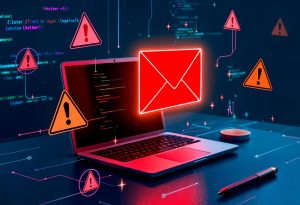
Cofense has identified phishing that impersonates ChatGPT payment notifications to steal login credentials and payment information. For UK SMEs, the risk sits where AI adoption meets routine subscription management. Verify billing through the official service, protect accounts with multi-factor authentication, and give staff a clear reporting route. If information has been disclosed, act immediately.
A request to update a ChatGPT payment method can look like routine administration, yet hand an attacker the information needed to target an employee’s account and business card.
Cofense’s analysis, published on 17 September 2026, describes attackers impersonating ChatGPT billing notifications to obtain credentials and payment information. The underlying trick is familiar: make an unexpected message feel like an ordinary subscription task.
For UK SMEs adopting AI tools, the lesson is to bring account ownership and payment verification into everyday security procedures.
SME Cybersecurity: how does ChatGPT billing phishing work?
The attack exploits trust in a familiar service rather than requiring a weakness in ChatGPT itself.
Why would a payment notification persuade an employee?
Phishing is a deceptive message designed to make someone disclose information or perform an unsafe action. Credentials are the information used to access an account, typically an email address and password.
Cofense describes fake notifications claiming that a payment method needs updating. Subscription billing gives attackers a credible business context: recipients may worry about losing access to a tool they use daily.
An owner-manager preparing proposals could act quickly to preserve access. An administrator managing several software subscriptions might treat the request as another payment task. The mitigation is the same: check the account through the official service, independently of the email.
Does this mean ChatGPT has been breached?
No. Impersonating a service is not evidence that its systems have been compromised. Cofense’s report concerns phishing targeting users, not proof of a breach of OpenAI.
The distinction matters when communicating with staff. Describe the risk as a fraudulent billing message, not an announcement that ChatGPT is unsafe.
The wider UK context supports taking this seriously. The government’s Cyber Security Breaches Survey 2025 found that 85% of businesses identifying a breach or attack reported phishing. That statistic covers phishing generally, not this campaign or all UK businesses.
Why are AI subscriptions a business risk?
An AI account can hold business information as well as provide access to a paid service.
What could an attacker obtain?
A compromised account may expose conversations, uploaded files or other information accessible within that account. The impact depends on its configuration and what employees have stored there. Cofense’s findings should not be interpreted as proof that these consequences occurred in every case.
For a consultancy, prompts might contain draft proposals or client context. Limit unnecessary sensitive uploads and use approved accounts with clear ownership.
Payment information creates a separate fraud risk. Keep subscription billing with a named owner and require independent verification before changing card details.
How does unmanaged AI use increase exposure?
Shadow AI means employees using AI services without business approval or oversight. It leaves directors unsure which accounts exist, who pays for them and what information they contain.
Create a simple register of approved AI services, account owners and billing contacts. Avoid shared passwords, which make access control and incident investigation harder.
What should an SME do this week?
Start with practical verification habits and account controls rather than buying another tool by default.
Five low-cost actions to reduce exposure
Check billing independently. Open the official app or a trusted bookmark and review subscription settings. Do not use an email’s payment button to resolve an unexpected billing problem. A familiar logo or secure-connection padlock does not establish legitimacy.
Protect the actual sign-in route. Enable multi-factor authentication, or MFA, which adds verification beyond a password. If employees sign in through Microsoft, Google or another identity provider, secure that account too. Follow the NCSC’s MFA guidance and remember that MFA does not make every phishing attempt harmless.
Use unique passwords. Store them in an approved password manager. If a password is reused, its theft can threaten other services. Correct reuse first, particularly across business email and AI accounts.
Brief staff on the billing scenario. Explain that an urgent payment-update message requires a separate account check. Include employees using personal subscriptions for work, not only centrally purchased accounts.
Make reporting easy. Provide one internal contact or reporting button. Encourage immediate disclosure without blame. After internal reporting, suspicious emails can be forwarded to the NCSC’s Suspicious Email Reporting Service at report@phishing.gov.uk.
What if someone has already entered information?
Use a trusted route to change exposed passwords and secure the relevant sign-in account. Revoke active sessions where available, check recovery settings and ask IT support to review suspicious activity.
If card details were disclosed, contact the card issuer immediately through a trusted number or banking app.
Assess whether personal information was exposed. The ICO’s personal data breach guidance explains notification requirements, including the 72-hour deadline where reporting is required. Not every phishing incident is reportable, but the assessment should be prompt and documented.
FAQs
These questions address common concerns about billing verification, account protection and incident response.
How can I check whether a ChatGPT payment email is genuine?
Open ChatGPT through its official app or a trusted bookmark and check your subscription settings independently. Do not rely on the email’s logo, sender display name or payment button. If the account shows no corresponding issue, report the message internally and seek support through the service’s official channels.
Does multi-factor authentication stop ChatGPT phishing?
MFA reduces the risk from stolen passwords, but it is not a complete defence. Some phishing attacks seek payment information or target the authentication process itself. Protect the account actually used to sign in, including any connected identity provider, and verify unexpected billing requests independently before entering information.
What should I do if I entered my business card details on a fake page?
Contact your card issuer immediately using its official app or a trusted telephone number. Explain that the details were entered on a suspected phishing site and follow its fraud advice. Notify your business’s payment owner, preserve the message and review transactions. Also secure any account credentials entered during the interaction.
FAQ note: These FAQs address recurring audience questions and discussion themes associated with Reddit and Quora; they have not been verified against live discussions for this article.
Conclusion
ChatGPT-themed phishing turns a familiar subscription task into a potential account and payment incident. The proportionate response is clear ownership, independent billing checks and fast reporting, not abandoning useful AI tools.
Add one rule to your team’s subscription process this week: verify every unexpected payment-update request inside the official service before taking action.
What is a VPN & Does my SME Need one? A VPN is a Virtual Private Network a method of securing your communications credentials. When it comes to SMEs, the choice of VPNs can significantly impact the security and efficiency of their operations. NordVPN secures your Internet data with military-grade encryption, ensures your activity remains private and helps bypass geographic content restrictions online. Join NordVPN Today and Save up to 73% and Get 3 months Extra Free – Rude Not to …!
SMECYBER Insights – Helping Keep Small Business CYBERSafe!
Launched in 2020 by Cybersecurity Journalist Iain Fraser and his team at IfOnly… SMECYBERInsights was developed to be the go-to platform providing definitive, reliable & actionable Cybersecurity News, Intel, Awareness & Training specifically written and curated for Small Business & Enterprise Owners, Partners and Directors throughout the UK. #SMECyberInsights #SMECyberSecurity #CyberAttack #CyberAwareness #Compliance #DDoS #Fraud #Ransomware #ScamAlert #SME #SmallBusiness #SmallBusinessOwner #ThreatIntel