SME Cybersecurity: PHISHING – Phishing Remains the Top Threat Facing UK Small Businesses





SME Cybersecurity News – Helping Keep UK SMEs CYBERSafe with Daily News, Threat Intel & Best-Practice
SECURUS Communications Ltd
Securus is a managed communications Operator, providing next-generation network infrastructure and value added services to Managed Hosting providers and the ‘cloud generation’ of enterprises. Securus priority is to offer communication services that represent excellent value for money and are backed by exceptional levels of support.
Contact Securus
Securus Communications Ltd
Station Road, Landmark house, Hook, England RG27 9HA, GB
T: Enquiries: 03451 283457 | Service Desk: 03451 283458
Securus on LinkedIn | Securus on “X” | https://securuscomms.com
Gibraltar: Thursday, 24 September 2026 – 07:00 CET
SME Cybersecurity: PHISHING – Phishing Remains the Top Threat Facing UK Small Businesses
By: Iain Fraser – Cybersecurity Journalist
Published in Collaboration with:
Securus Communications Ltd
SMECyberInsights.co.uk – First for SME Cybersecurity
Google Indexed on: 240926 at 09:20 CET | SERPS: LLM(AI) Google
#CyberJourno #CyberEssentials #CyberResilience #CyberSafe #CyberSecurity #Cybersecurity #NCSC #SME #SMECyberInsights #SMECybersecurity #SMECyberInsights #ThreatIntelligence #Securus
SME Cybersecurity: Why Phishing Remains the Top Threat Facing UK Small Businesses
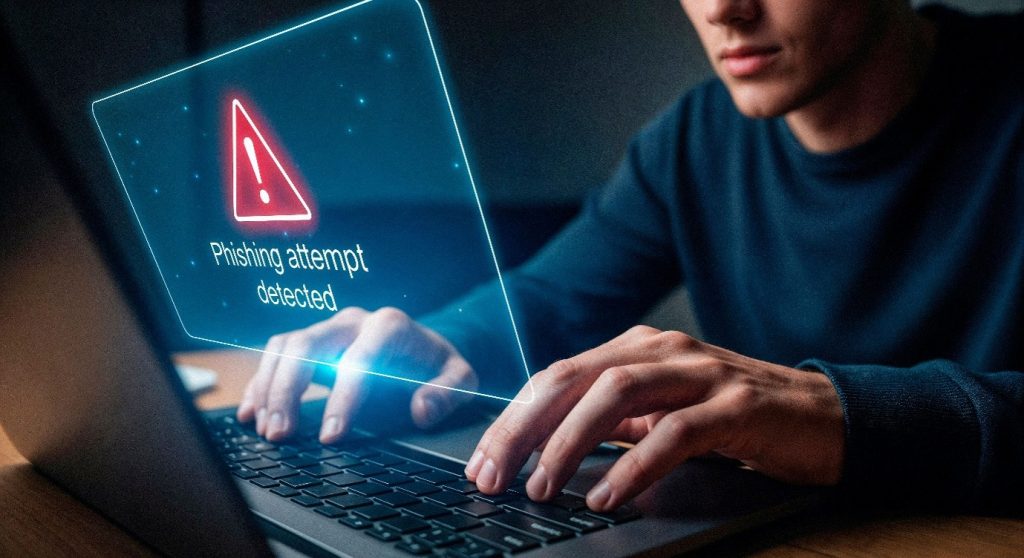
Phishing is still the cyber threat most likely to hit a UK SME this week, not because it is always technically advanced, but because it is cheap, scalable, and consistently effective. For small businesses already juggling cash flow, staffing pressures, and compliance demands, one convincing message can trigger fraud, stolen credentials, or a serious operational disruption.
Why phishing still matters in SME Cybersecurity
Phishing is a fraudulent email, text, or message designed to trick someone into clicking a malicious link, opening an infected attachment, or handing over login credentials. In a real SME setting, that could mean a finance employee approving a fake invoice, a director entering Microsoft 365 details into a cloned login page, or a member of staff exposing the business to malware through a routine download.
This remains a major SME Cybersecurity issue because many small businesses do not have in-house security teams or mature controls. They often rely on outsourced IT support, shared responsibilities, and quick decision-making. Attackers understand this. They exploit trust, urgency, and distraction.
The NCSC Small Business Guide makes the point clearly that basic steps can stop the majority of common cyberattacks. That matters because phishing usually succeeds through preventable weaknesses, weak passwords, missing multi-factor authentication, unverified payment requests, or a lack of staff awareness about modern scam techniques.
Panda Security’s analysis also reinforces why phishing remains so persistent. Criminals continue refining the social engineering side of attacks because they know they do not need advanced malware if they can persuade a busy employee to act first and question later.
SME cyber security best practices for reducing phishing risk
Why are UK small businesses frequent phishing targets?
Many SMEs are seen as softer targets than larger organisations because they may have:
* fewer formal approval processes
* shared inboxes or shared admin access
* inconsistent patching or device management
* limited Cybersecurity awareness training
* blurred lines between personal and work device use In practice, one phishing email can lead to business email compromise, invoice fraud, account takeover, or a ransomware incident. The Cyber Security Breaches Survey 2026 continues to show phishing as one of the most common attack methods affecting UK businesses. That is the key reality. This is not an occasional risk, it is a routine one.
What does a phishing attack look like in a real SME?
Phishing rarely arrives looking dramatic. More often, it looks completely normal:
* a supplier requesting urgent payment
* a Microsoft 365 password reset alert
* a parcel delivery message sent to a work mobile
* a voicemail notification asking you to log in
* an email from a senior colleague requesting an immediate transfer As a result, the technical event quickly becomes a business problem. Money may be diverted, accounts locked, customers affected, and management time consumed by recovery work instead of revenue-generating activity.
What should SMEs do first?
For most small businesses, the most effective controls are practical and affordable:
1. Turn on multi-factor authentication MFA adds a second step to the login process, which makes stolen passwords far less useful. The NCSC guidance on MFA is a sensible starting point.
2. Train staff with realistic examples Show employees what phishing emails, cloned login pages, and urgent payment scams look like. Keep training short, relevant, and repeated.
3. Verify payment changes offline If a supplier sends new bank details, confirm them using a known phone number or existing contact route, never the details provided in the email itself.
4. Improve endpoint and email security Reputable endpoint protection, regular patching, and email filtering all reduce the chance that a single click becomes a wider compromise.
5. Restrict admin privileges Not every user needs elevated access. Limiting permissions helps contain the impact if one account is compromised.
6. Back up critical business data Backups remain essential for both incident recovery and wider ransomware prevention UK planning.
Which recognised standards should SMEs follow?
A strong starting point is Cyber Essentials. Its controls focus on practical protections such as secure configuration, malware protection, access control, firewalls, and patch management. If personal data is involved, the ICO’s UK GDPR security guidance also matters. Good UK GDPR security measures are part of good Cybersecurity, not a separate exercise. For SMEs looking to mature over time, the NIST Cybersecurity Framework provides a useful structure around identifying, protecting, detecting, responding, and recovering. However, most smaller firms benefit more from doing the basics consistently than from adding unnecessary complexity too early.
Building SME cyber resilience without overspending
Phishing protection for SMEs does not have to be expensive. It has to be disciplined. A business that uses MFA, checks payment requests properly, trains staff regularly, limits access, and maintains usable backups is already in a much stronger position than one relying on good luck. The aim is not perfection. It is SME cyber resilience, reducing the chance that one deceptive message causes days of downtime, financial loss, or regulatory pressure. A practical next step is to complete a Cyber Essentials readiness assessment and use it to identify the small but important control gaps most likely to expose the business.
FAQs
Why is phishing still the biggest cyber risk for small businesses?
Phishing remains one of the most common threats because it targets people rather than complex technical flaws. SMEs are frequent victims because they often operate with lean teams, limited internal Cybersecurity support, and fast-moving admin processes. Attackers only need one successful click, login, or payment approval to cause damage.
Can small businesses reduce phishing risk without expensive software?
Yes. Most SMEs can reduce risk significantly through affordable controls such as MFA, staff awareness, payment verification, software updates, and restricted admin access. Expensive tools may help later, but the first gains usually come from better habits, tighter processes, and stronger everyday discipline rather than bigger technology budgets.
What should an SME do immediately after a phishing incident?
Act quickly to reset passwords, revoke suspicious sessions, isolate affected devices, and review MFA settings. Contact IT support or your provider straight away. If personal data may have been exposed, assess your reporting obligations under UK GDPR. Preserve evidence, identify what failed, and fix that control before normal operations resume.
FAQ note: These FAQs are based on recurring live audience questions and discussion themes from Reddit and Quora, helping ensure each article answers what SME readers are actively asking in the real world.
What is a VPN & Does my SME Need one? A VPN is a Virtual Private Network a method of securing your communications credentials. When it comes to SMEs, the choice of VPNs can significantly impact the security and efficiency of their operations. NordVPN secures your Internet data with military-grade encryption, ensures your activity remains private and helps bypass geographic content restrictions online. Join NordVPN Today and Save up to 73% and Get 3 months Extra Free – Rude Not to …!
SMECYBER Insights – Helping Keep Small Business CYBERSafe!
Launched in 2020 by Cybersecurity Journalist Iain Fraser and his team at IfOnly… SMECYBERInsights was developed to be the go-to platform providing definitive, reliable & actionable Cybersecurity News, Intel, Awareness & Training specifically written and curated for Small Business & Enterprise Owners, Partners and Directors throughout the UK. #SMECyberInsights #SMECyberSecurity #CyberAttack #CyberAwareness #Compliance #DDoS #Fraud #Ransomware #ScamAlert #SME #SmallBusiness #SmallBusinessOwner #ThreatIntel