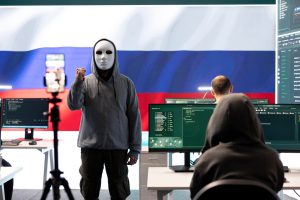
NCSC UK & Allies Expose Russian State-Supported Zero-Click Phishing Campaign













SME Cybersecurity News – Helping Keep UK SMEs CYBERSafe with Daily News, Threat Intel & Best-Practice

Helping Keep Small Business CYBERSafe!
Gibraltar: Monday 31 August 2026 at 07:00 CET
NCSC UK and Allies Expose Russian State-Supported Zero-Click Phishing Campaign Targeting Western Organisations
Published in Collaboration with: Nord VPN
By Iain Fraser – Cybersecurity Journalist & Authority Writer
Via SME Cyber Insights – First for SME Cybersecurity News
Google Indexed on: 310826 at 09:45 CET | SERPS: LLM(AI) Google
#CyberJourno #CyberEssentials #CyberResilience #CyberSafe #CyberSecurity #Cybersecurity #NCSC #SME #SMECyberInsights #SMECybersecurity #SMECyberInsights #ThreatIntelligence StateActors #Russia
NCSC UK and Allies Expose Russian State-Supported Zero-Click Phishing Campaign Targeting Western Organisations
The latest warning from the UK’s National Cyber Security Centre is a reminder that phishing no longer needs a clumsy link, a dubious attachment, or an especially unlucky click. In this case, the concern is a zero-click campaign tied to Russian state-supported actors, where simply viewing a malicious email in a vulnerable system may be enough to trigger compromise. That makes the threat both technically serious and operationally awkward, particularly for organisations still treating phishing as a user-awareness problem alone.
What the NCSC and partners have exposed
The NCSC, working with cyber agencies in 15 countries, has exposed activity linked to LAUNDRY BEAR, an advanced persistent threat group focused on stealing email data.
According to the NCSC, the group has targeted organisations using Zimbra Collaboration Suite since July 2025. Sectors affected in the US have included:
* defence
* government
* education
* energy
* law enforcement
* media
* NGOs
* technology
The campaign uses a zero-click exploit known as “beehive” or “Ulej”. The NCSC says that, unlike traditional phishing, the victim does not need to click a link or open a file. Instead, “the user only has to view a malicious email within a vulnerable version of the ZCS webmail service to be compromised.”
That small detail changes the defensive picture considerably.
Why this campaign matters
Most phishing guidance still centres on user behaviour: do not click, do not download, do not trust odd messages. That advice still matters, but this campaign shows its limits.
Zero-click means less room for human recovery
If compromise can happen when an email is merely viewed in a vulnerable platform, then the attack path depends less on user error and more on:
* software patching
* exposure management
* threat detection
* monitoring for persistence
* platform-specific hardening
That is why this campaign should be read as an infrastructure warning as much as an espionage warning.
Email remains a strategic target
The NCSC says LAUNDRY BEAR specialises in the “covert acquisition of email data”. That matters because email is still one of the richest targets in any organisation. A compromised mailbox can reveal:
* internal discussions
* credentials and reset flows
* attachments and sensitive documents
* contact networks
* security conversations
* commercial and diplomatic context
In the wrong hands, a mailbox is less a message archive than a guided tour of the organisation.
What organisations should do now
The NCSC says organisations using Zimbra should immediately patch vulnerabilities and improve network monitoring capabilities. That is the urgent response.
The broader message is that defenders should assume similar techniques may spread. The NCSC and partners warn it is likely “beehive” could be adapted to exploit other vulnerabilities” and that as organisations update Zimbra, the group may shift to other email systems used by Western organisations.
In practice, that means organisations should prioritise:
* patching internet-facing email systems quickly
* reviewing exposure in Zimbra and comparable platforms
* strengthening detection for unusual email access and persistence
* monitoring for post-compromise behaviour
* improving resilience around account and session security
The NCSC also recommends that UK organisations sign up for its free Early Warning service for malicious network activity notifications.
FAQs
FAQs note: These FAQs are derived from recurring live audience questions and discussion themes on Reddit and Quora relevant to phishing, email security, state-backed cyber activity, and zero-click exploits. They are not generated from the article body.
1. What does zero-click phishing mean?
It means the victim does not need to click a malicious link or open an attachment. In this case, simply viewing a malicious email in a vulnerable email platform may be enough for compromise.
2. Is this only a problem for Zimbra users?
Zimbra users are the immediate focus of this warning, but the advisory suggests similar methods could be adapted for other platforms if attackers find suitable vulnerabilities.
3. Why are email systems such valuable targets?
Because email often contains sensitive information, reset links, internal discussions, attachments, and access clues that can support espionage, fraud, and wider compromise.
4. Can staff awareness training stop this kind of attack?
Not on its own. Awareness still matters, but zero-click attacks rely more heavily on patching, technical controls, platform security, and detection capability.
Looking Forward
This campaign is a useful corrective to a common cybersecurity habit: assuming phishing is mainly about persuading users to make mistakes. Increasingly, the more serious campaigns are designed to remove the user from the equation wherever possible.
For Western organisations, the lesson is straightforward. If email remains central to operations, then email infrastructure must be treated as a frontline security system, not a background utility. In a zero-click world, the old advice to “be careful what you click” is still true. It is just no longer enough.
ABOUT IAIN FRASER – I am a Gibraltar based, Accredited Journalist, (*NUJ, IFJ & ONA) Authority Writer, Commentator & Publisher of SMECyber and cover all aspects of Cybersecurity [Awareness, Threat Management, Best Practice Compliance & Mitigation] and report throughout Europe & the UK
LinkedIn Bio: IainFraserJournalist
Email: iain@iainfraser.net | www.iainfraser.net
The Latest SME Cybersecurity News, Threat Intelligence & Analysis, Timely Scam Alerts, Best-practice Compliance, Mitigation & Resources specifically curated for UK Based SMEs in a Single Weekly Email direct to your Inbox or Smart Device together with Unrestricted Free Access to our entire SME Cyber Knowledge & Tutorial Library.
What is a VPN & Does my SME Need one? A VPN is a Virtual Private Network a method of securing your communications credentials. When it comes to SMEs, the choice of VPNs can significantly impact the security and efficiency of their operations. NordVPN secures your Internet data with military-grade encryption, ensures your activity remains private and helps bypass geographic content restrictions online. Join NordVPN Today and Save up to 73% and Get 3 months Extra Free – Rude Not to …!