SME Cybersecurity and modular business platforms: what UK firms should ask before replacing SaaS






SME Cybersecurity News | SMECYBERInsights.co.uk
SME Cybersecurity News – Helping Keep UK SMEs CYBERSafe with Daily News, Threat Intel & Best-Practice

SECURUS Communications Ltd
Securus is a managed communications Operator, providing next-generation network infrastructure and value added services to Managed Hosting providers and the ‘cloud generation’ of enterprises. Securus priority is to offer communication services that represent excellent value for money and are backed by exceptional levels of support.
Contact Securus
Securus Communications Ltd
Station Road, Landmark house, Hook, England RG27 9HA, GB
T: Enquiries: 03451 283457 | Service Desk: 03451 283458
Securus on LinkedIn | Securus on “X” | https://securuscomms.com
Gibraltar: Friday, 19 June 2026 – 07:00 CET
SME Cybersecurity and modular business platforms: what UK firms should ask before replacing SaaS
By: Iain Fraser – Cybersecurity Journalist
Published in Collaboration with:
Securus Communications Ltd
SMECyberInsights.co.uk – First for SME Cybersecurity
Google Indexed on:
#SMECyberInsights #SMECybersecurity #SMECyberInsights #SME #CyberSafe #CyberSecurity #Cybersecurity #NCSC #CyberEssentials #CyberResilience #SMECybersecurity #CyberResilience #DigitalTransformation
SME Cybersecurity and modular business platforms: what UK firms should ask before replacing SaaS
When an SME replaces a patchwork of SaaS tools with a single business platform, the real risk is rarely the migration alone. It is what gets centralised without proper controls. Customer data, finance workflows, permissions, integrations, and operational dependency all move into one place, which means a modular CRM-to-ERP launch is not just a software story. It is a SME Cybersecurity story too.
SME Cybersecurity and modular platforms for UK small businesses
A modular CRM-to-ERP platform is designed to let businesses combine functions such as customer management, quoting, billing, stock, projects, and reporting in a more unified way. For SMEs, the appeal is obvious. It can reduce tool sprawl, cut duplicate data entry, and avoid the cost of commissioning fully bespoke software.
However, consolidation creates concentration risk. If one platform becomes the system of record for sales, finance, operations, and customer data, a misconfiguration or compromise can have a wider business impact than the failure of a single standalone app. That matters for cyber security for small businesses, especially where access is still managed informally or outsourced IT support is expected to “just handle it”.
The UK context is clear. The government’s Cyber Security Breaches Survey 2025 found that 43% of businesses identified a breach or attack in the previous 12 months. For SMEs, the issue is often not advanced malware. It is weak authentication, over-permissioned users, missed updates, and poor visibility across connected systems.
What Cybersecurity questions should SMEs ask before replacing SaaS?
Start with the basics that are often skipped during software buying.
* How is access controlled? Every user should have named accounts, role-based permissions, and multi-factor authentication (MFA) for admin and remote access.
* Where is data stored and backed up? Centralised platforms need tested backup and recovery arrangements, not assumptions.
* How are integrations secured? APIs, plugins, and supplier connections expand the attack surface and increase supply chain cyber risk.
* Who applies security updates? Whether the platform is hosted, managed, or self-administered, patch responsibility must be explicit.
* What happens if the provider fails? SMEs should understand exit options, exportability of data, and continuity planning.
In practice, a modular platform can improve SME cyber resilience if it replaces scattered tools with better governance. It becomes a problem when convenience outruns control.
What SME cyber security best practices matter most with CRM-to-ERP platforms?
The good news is that most of the highest-value protections are not exotic. They are familiar controls applied properly and early.
Which controls should be prioritised first?
Use Cyber Essentials as the baseline and align wider governance with the NCSC Small Business Guide.
1. Turn on MFA for all privileged users and any account that can access customer, finance, or operational data.
2. Remove shared logins and review access whenever staff, contractors, or outsourced providers change.
3. Restrict admin rights; especially where the same person handles finance, sales, and system configuration.
4. Keep an asset and integration list so you know what connects to the platform and what data it touches.
5. Build a simple cyber incident response process using NIST Cybersecurity Framework 2.0 functions as a guide, without overcomplicating things for a small team.
6. Check your ICO guidance on security, because if personal data sits in the platform, UK GDPR security measures are part of the design requirement, not an afterthought.
Is modular software safer than SaaS or bespoke software?
Not automatically. A modular platform can reduce complexity, but only if it is configured and governed well. SaaS sprawl creates one kind of risk; a poorly controlled all-in-one platform creates another. The better question is whether the platform supports clear access control, patching, logging, recovery, and supplier accountability.
The practical takeaway is simple. SMEs should assess new platforms not just on features and cost, but on how well they support secure operations day to day.
Before signing off any CRM-to-ERP project, run a short Cyber Essentials readiness check against the proposed platform and its integrations.
FAQs
What is a modular CRM-to-ERP platform in SME terms?
It is a business system that combines multiple functions, such as CRM, finance, operations, and reporting, into connected modules. For SMEs, this can reduce software sprawl and admin overhead. However, it also centralises data and access, so weak controls can create a larger single point of failure.
Is replacing multiple SaaS tools better for SME Cybersecurity?
It can be, but only if the replacement improves governance. Fewer tools may mean fewer unmanaged logins, integrations, and data silos. However, one central platform also increases dependency. Access control, MFA, backups, patching, and supplier due diligence matter more, not less, after consolidation.
What should an SME check before adopting a new business platform?
Check who can access it, whether MFA is supported, how backups work, where data is stored, how updates are managed, and what integrations are required. Also confirm the provider’s security responsibilities and your own. If customer or staff data is involved, UK GDPR security obligations apply from the start.
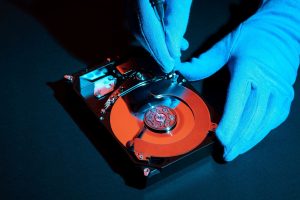
Lost your data? Don’t panic. R3 can help! Real data recovery services from a real UK lab!
Data loss can happen at any time and can happen in the most unexpected ways. As long as your device hasn’t been stolen R3 can recover your data from the most unlikely disasters. From their wholly secure state of the art Recovery Lab they can deploy the very best data recovery service as quickly as possible.
Contact R3 Data Recovery
Security House, Windsor St, Sheffield S4 7WB,
T: Enquires 800 999 3282 | Emergency: 07511 051360
R3 On LinkedIn | https://www.r3datarecovery.com/
SMECYBER Insights – Helping Keep Small Business CYBERSafe!
Launched in 2020 by Cybersecurity Journalist Iain Fraser and his team at IfOnly… SMECYBERInsights was developed to be the go-to platform providing definitive, reliable & actionable Cybersecurity News, Intel, Awareness & Training specifically written and curated for Small Business & Enterprise Owners, Partners and Directors throughout the UK. #SMECyberInsights #SMECyberSecurity #CyberAttack #CyberAwareness #Compliance #DDoS #Fraud #Ransomware #ScamAlert #SME #SmallBusiness #SmallBusinessOwner #ThreatIntel