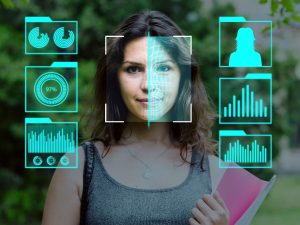
Data Verification: TrustScale, Argus meets the Growing Need for authoritative AI Verification










SME Cybersecurity News | SMECYBERInsights.co.uk
SME Cybersecurity News – Helping Keep UK SMEs CYBERSafe with Daily News, Threat Intel & Best-Practice

Helping Keep Small Business CYBERSafe!
Gibraltar: Wednesday 27 May 2026 at 09:00 CET
Data Verification: TrustScale, Argus meets the Growing Need for authoritative AI Verification
Published in Collaboration with: Nord VPN
By Iain Fraser – Cybersecurity Journalist & Authority Writer
IfOnlyCommunications – Gibraltar
Google Indexed on 27 May @ 0954
#SMECyberInsights #SMECybersecurity #SMECyberInsights #SME #CyberSafe #CyberSecurity #Cybersecurity #NCSC #CyberEssentials #CyberResilience #TrustScale #Argus #AIVerification #AIGovernance #AITrust #ResponsibleAI #HallucinationRisk #LegalTech #Cybersecurity #Geopolitics
Data Verification: TrustScale, Argus meets the Growing Need for authoritative AI Verification –
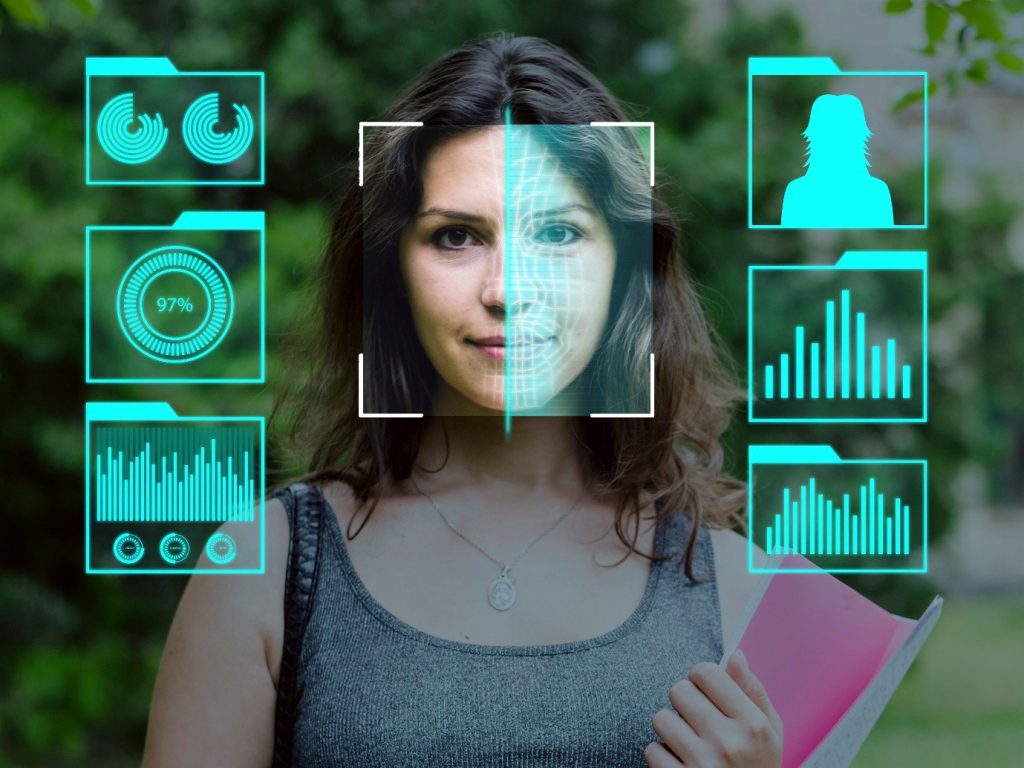
As artificial intelligence becomes more widely embedded in business workflows, public services, legal processes, and decision-support systems, one issue is moving steadily to the foreground: how organisations verify whether AI-generated outputs can be trusted. That question sits at the heart of a growing market need, and it is where TrustScale and its Argus proposition appear particularly relevant. In simple terms, the opportunity is not merely to present Argus as an AI “lie detector,” but to position it more credibly as part of the emerging infrastructure for AI verification, evidential confidence, and governance-led trust.
This matters because the risks associated with AI output are no longer theoretical. As large language models and other generative systems are adopted at scale, concerns around hallucination, factual inaccuracy, misleading synthesis, unverifiable assertions, and decision risk are becoming increasingly important. In low-stakes settings, these issues may be inconvenient. In high-stakes environments, they can introduce serious operational, legal, reputational, and governance consequences. That is why the conversation is beginning to move beyond model performance alone and toward the question of how confidence in AI outputs is established, evidenced, and communicated.
This creates a meaningful opening for a proposition like Argus. Rather than existing as a novelty technology or a simple accuracy-checking tool, it can be framed as part of a broader response to the trust problem now shaping enterprise AI adoption. In that sense, the strategic significance of Argus lies in its potential role as a verification layer: something that helps organisations assess, interpret, and place confidence in AI-generated information where scrutiny matters. That is a much stronger and more durable market position than one based purely on product novelty.
There is also a wider commercial logic to this. Across sectors, organisations are under pressure to adopt AI in order to improve speed, efficiency, and productivity. At the same time, they are being asked to demonstrate accountability, explainability, and responsible use. This tension between innovation and assurance is quickly becoming one of the defining dynamics of the AI market. Businesses want the benefits of automation and augmentation, but they also need ways to mitigate uncertainty, reduce liability exposure, and improve confidence in machine-generated outputs. A verification-oriented proposition fits squarely into that need.
One of the more strategically interesting aspects of the TrustScale / Argus proposition is its potential for industry-specific tuning. As discussed, this appears especially relevant in environments such as law and legal services, where terminology, evidential thresholds, and standards of interpretation are highly specific. In these settings, the ability to align verification capability with the language and expectations of a particular domain could become a significant differentiator. It moves the proposition away from generic AI fact-checking and toward something closer to sector-aware governance infrastructure.
The legal sector is an especially notable example because the UK legal market alone may represent a substantial opportunity for tools and frameworks that improve confidence in machine-assisted output. Legal professionals operate in a domain where language precision, source integrity, traceability, and risk exposure are all central concerns. If AI tools are to be used more widely in legal research, drafting, analysis, or advisory workflows, then mechanisms for validation and evidential confidence will become increasingly valuable. The same wider logic can also be applied to other fields such as cybersecurity and geopolitics, where analytical accuracy, source credibility, and decision confidence are similarly critical.
From a thought leadership standpoint, this gives TrustScale a compelling platform. The company is well placed to contribute to a serious market discussion around AI trust, verification, hallucination risk, accountability, and governance. Importantly, this is not just a technology conversation. It is also a business, regulatory, and institutional one. Boards, legal teams, compliance stakeholders, risk functions, and operational leaders all have a growing interest in how AI outputs are validated before they influence decisions. That means Argus can potentially be described not simply as a product, but as part of a broader answer to one of the most urgent questions in AI adoption: when should organisations trust what the machine tells them?
Overall, the TrustScale / Argus proposition appears aligned with a market that is only likely to grow in relevance. As AI systems become more capable, they also become more consequential, and the need for verification becomes more pressing. The real opportunity for TrustScale lies in articulating Argus as a serious trust and governance capability for environments where accuracy, evidential confidence, and accountability cannot be treated lightly. If framed in those terms, the proposition has the potential to resonate strongly across legal, cybersecurity, geopolitical, and other high-scrutiny sectors where confidence in information is not optional, but essential.
ABOUT IAIN FRASER – I am a Gibraltar based, Accredited Journalist, (*NUJ, IFJ & ONA) Authority Writer, Commentator & Publisher of SMECyber and cover all aspects of Cybersecurity [Awareness, Threat Management, Best Practice Compliance & Mitigation] and report throughout Europe & the UK
LinkedIn Bio: IainFraserJournalist
Email: iain@iainfraser.net | www.iainfraser.net
The Latest SME Cybersecurity News, Threat Intelligence & Analysis, Timely Scam Alerts, Best-practice Compliance, Mitigation & Resources specifically curated for UK Based SMEs in a Single Weekly Email direct to your Inbox or Smart Device together with Unrestricted Free Access to our entire SME Cyber Knowledge & Tutorial Library.
What is a VPN & Does my SME Need one? A VPN is a Virtual Private Network a method of securing your communications credentials. When it comes to SMEs, the choice of VPNs can significantly impact the security and efficiency of their operations. NordVPN secures your Internet data with military-grade encryption, ensures your activity remains private and helps bypass geographic content restrictions online. Join NordVPN Today and Save up to 73% and Get 3 months Extra Free – Rude Not to …!